How to Become a Content Creator: A 10-Step Guide for Beginners
Ready to become a content creator? This step-by-step guide covers everything from finding your niche and choosing gear to growing your audience and making money.
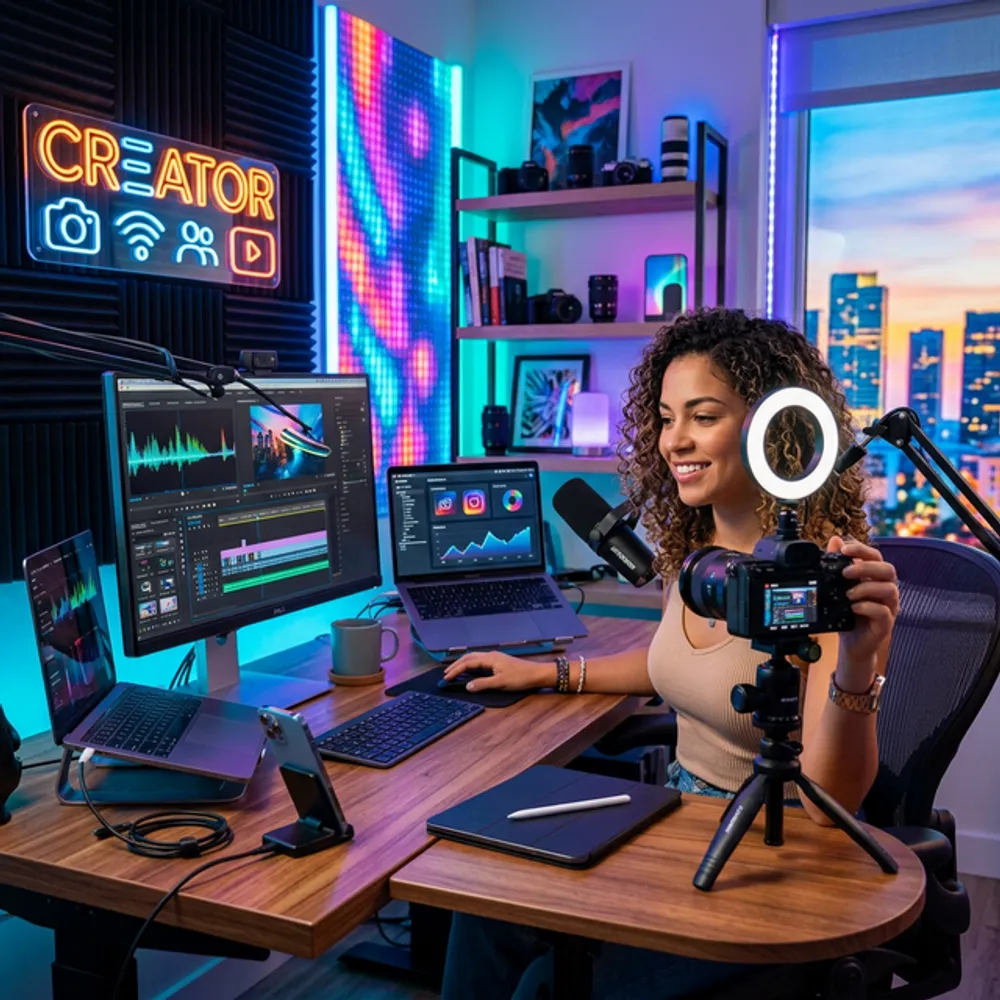
The creator economy is a booming, multi-billion dollar industry, but breaking in can feel overwhelming. Many aspiring creators get stuck, paralyzed by where to start or what to post. They burn out trying to do everything at once and fail to turn their passion into a sustainable business.
The good news? You don’t need expensive Hollywood gear or a huge following to succeed. This guide provides a clear, step-by-step roadmap for beginners, eliminating the guesswork so you can build an audience and an income.
Table of Contents
- The 10-Step Roadmap to Becoming a Content Creator
- Step 1: Find Your Niche & Define Your Audience
- Step 2: Choose Your Primary Platform
- Step 3: Develop Your Content Strategy
- Step 4: Gather Your Essential Gear
- Step 5: Plan & Script Your Content
- Step 6: Batch Record Your Videos
- Step 7: Edit for Maximum Retention
- Step 8: Optimize & Schedule Your Posts
- Step 9: Engage & Build a Community
- Step 10: Analyze, Iterate, & Grow
- How to Monetize Your Content
- Common Mistakes to Avoid
- GetMediaTools Integration
- Frequently Asked Questions
The 10-Step Roadmap to Becoming a Content Creator
Step 1: Find Your Niche & Define Your Audience
Before you hit record, you need to know what you’re going to talk about and who you’re talking to.
- Find Your Niche: List your passions, skills, and interests. The sweet spot is the intersection of what you love, what you’re good at, and what people are searching for. Instead of a broad topic like “fitness,” drill down to a hyper-niche like “20-minute strength workouts for postpartum moms.” A specific niche makes it easier to stand out.
- Define Your Audience: Who is your ideal follower? Give them a name. What are their goals? What problems do they face? Understanding your audience’s pain points is the key to creating content that truly resonates and provides value.
Step 2: Choose Your Primary Platform
Don’t try to be everywhere at once—it’s a recipe for burnout. Master one platform first.
- TikTok: Best for raw, authentic content and has massive organic reach potential.
- Instagram: Great for high-quality visuals, community building through Stories, and ecosystem integration.
- YouTube: The king of long-form content and long-term search discoverability. You can also start with Shorts for quicker growth. Many creators find success by creating successful faceless YouTube channels if they are camera-shy.
Step 3: Develop Your Content Strategy
A content strategy is your blueprint for what to post. It ensures consistency and keeps you from scrambling for ideas.
- Content Pillars: Choose 3-5 sub-topics (pillars) within your niche that you will consistently talk about. For our fitness example, pillars could be: “Workout Routines,” “Nutrition Tips,” and “Mindset & Motivation.”
- Content Formats: Decide on the types of content you’ll create. Will you make tutorials, reviews, vlogs, or listicles?
- Posting Schedule: Choose a realistic posting frequency. Consistency is more important than quantity. Starting with 2-3 high-quality posts per week is better than seven rushed ones.
Step 4: Gather Your Essential Gear
You don’t need a professional studio to start. Your gear should be simple and effective.
- A Modern Smartphone: Any phone that shoots in 1080p or 4K is perfect for starting out.
- An External Microphone: Audio is more important than video quality. A simple $30 lapel mic or a USB microphone will make you sound crisp and professional.
- Good Lighting: Natural light is your best friend. Sit facing a window. If you film at night, a basic ring light is a great investment.
- Stabilization: Shaky footage looks amateur. Use a small tripod or even a stack of books to keep your phone steady.
Step 5: Plan & Script Your Content
Great content rarely happens by accident.
- Research Ideas: See what successful creators in your niche are doing. What topics get the most engagement? What questions are people asking?
- Use the Hook-Hold-Reward Framework:
- Hook: Start with a strong pattern interrupt or a compelling promise in the first 3 seconds (e.g., “Stop making these three workout mistakes…”).
- Hold: Deliver the core value of your video with clear, concise points.
- Reward: End with a strong call-to-action (CTA), like asking a question to spark comments or directing viewers to a link in your bio.
- Write a Script: Even a bullet-point script keeps you on track. Use a teleprompter app to read your script while looking directly into the camera lens.
Step 6: Batch Record Your Videos
Batching is the secret to consistency. Instead of filming daily, block out a 2-3 hour session once a week to record all your videos. This saves immense time on setup and teardown and helps you get into a creative flow. Film all your scripts back-to-back without stopping to review minor mistakes—you’ll fix those in the edit.
Step 7: Edit for Maximum Retention
Editing is where you shape your story and keep viewers engaged.
- Use a Capable Editor: Start with user-friendly apps. Check out our guide to the best free video editors for TikTok—many of which work for all platforms. CapCut is a fantastic free option.
- Cut the Fluff: Remove every awkward pause, “um,” and breath. The pacing should be quick and energetic.
- Add Captions: Over 80% of social media videos are watched on mute. Use your editor’s auto-caption feature to add on-screen text.
- Incorporate Visuals: Add B-roll (supplemental footage), images, and simple graphics to make your video more dynamic.
Step 8: Optimize & Schedule Your Posts
Your video is done, but your work isn’t. Optimization helps the algorithm understand and distribute your content.
- Write a Keyword-Rich Caption: Clearly describe what your video is about using terms your target audience would search for.
- Use Relevant Hashtags: Use a mix of broad industry tags (#fitness), specific niche tags (#postpartumworkout), and community tags.
- Schedule Your Content: Use a free tool like Meta Business Suite to schedule your posts for optimal times, automating your publishing and ensuring you stick to your schedule.
Step 9: Engage & Build a Community
The algorithm rewards engagement. Your job isn’t over when you hit “publish.”
- Reply to Comments: For the first hour after posting, reply to every comment with a genuine response or a follow-up question to spark conversations.
- Engage with Others: Spend 15 minutes a day interacting with content from other creators in your niche. It makes you a visible, active member of the community.
- Use Interactive Features: Use polls, Q&As, and stickers in Instagram Stories or go live on TikTok to build a direct relationship with your followers.
Step 10: Analyze, Iterate, & Grow
Data tells you what’s working and what isn’t.
- Check Your Analytics: After 24-48 hours, review your video’s performance. Don’t just look at views.
- Focus on Key Metrics:
- Audience Retention: Where did viewers drop off? This tells you how to improve your hooks and pacing.
- Saves & Shares: These are powerful indicators that your content is valuable.
- Click-Through Rate (CTR): How many people clicked the link in your bio?
- Double Down on What Works: If a certain topic or format performs well, make more of it. Use your data to refine your content strategy continuously.
How to Monetize Your Content
Successful creators build multiple income streams. Don’t rely on a single source.
- Affiliate Marketing: Promote products you genuinely use and love. You earn a commission on any sales made through your unique link. This is often the easiest way to start earning with a small audience.
- Brand Sponsorships: As your audience grows, brands may pay you to feature their products in your content. Focus on building an engaged community, as brands value high engagement rates more than just high follower counts.
- Digital Products: Create and sell your own products, such as e-books, guides, templates, or online courses. This offers high profit margins and gives you full control.
- Platform Ad Revenue: On platforms like YouTube, you can earn money from ads shown on your videos once you meet certain eligibility requirements (like subscriber count and watch hours).
- Services: Use your content to generate leads for a service-based business, such as coaching, consulting, or freelance work.
Common Mistakes to Avoid
- Mistake: Forcing trends that don’t fit your brand. It confuses the algorithm and alienates your core audience. Pro Tip: Only adapt trends that naturally align with your niche, and always add your unique value.
- Mistake: Buying followers. Fake engagement ruins your credibility and distribution. Pro Tip: Focus on organic growth. 1,000 real fans are more valuable than 100,000 bots.
- Mistake: Neglecting cross-platform optimization. Uploading the same exact file everywhere wastes potential. Pro Tip: Tweak your metadata for each platform—use searchable titles for YouTube, longer captions for Instagram, and trending sounds for TikTok.
- Mistake: Waiting for perfect, expensive gear. This kills your momentum before you start. Pro Tip: Your smartphone is all you need. Master lighting and storytelling first, then upgrade your gear later.
GetMediaTools Integration
When conducting competitor research, you’ll want to save reference videos from other creators. However, downloading directly from apps leaves distracting watermarks.
GetMediaTools is the perfect solution. As a directory of free social media downloaders, it allows you to save high-quality, watermark-free videos from TikTok, Instagram, and more. This lets you analyze a competitor’s editing style frame-by-frame or easily repurpose your own content across platforms without algorithmic penalties.
Frequently Asked Questions
Q: Where do I start if I have no idea what to do? A: Start small. Pick just one platform to master first. Use your smartphone as your camera. Your only goal for the first month should be to create a consistent posting habit, not to go viral.
Q: How do I overcome the fear of being judged by friends and family? A: This is a very common fear. Consider creating a new account that isn’t tied to your personal contacts. This “secret account” strategy allows you to practice and find your voice without the pressure of being watched by people you know.
Q: How do I choose a niche if I have many hobbies? A: Find the overlap between your passions, your skills, and what an audience is looking for. Start with a broader topic you love and narrow it down as you see what resonates with your viewers through analytics.
Q: How do creators actually make money? A: They diversify their income. Most full-time creators earn money from a mix of affiliate marketing, brand sponsorships, ad revenue, and selling their own digital products or services. Start with affiliate marketing or a simple digital product early on.
Q: Do I need to show my face to be successful? A: No, it’s not required. While showing your face can build trust faster, there are thousands of successful faceless channels in niches like tutorials, animation, and product showcases.
Q: How can I post consistently without burning out? A: Batch your content. Dedicate one block of time each week to plan, film, and schedule all your posts. This is far more sustainable than the daily content creation grind.